 “Los ascensores son como la salud: sólo nos percatamos de su importancia cuando faltan.” Este invento ha tenido cialis price grandes consecuencias en nuestra civilización, aunque a menudo no somos conscientes de su trascendencia. Ha influenciado especialmente como elemento clave en la arquitectura vertical de las ciudades, y consecuentemente en el tejido social que se ha constituido en ellas.
Key moments of its origin
The beginnings of lifting mechanisms have their origin in the civilization of Pharaonic Egypt, who used ramp and rope mechanisms to move stone blocks for the construction of pyramids (1500 BC).
The Hellenistic civilization also left its mark on the evolution of this invention. Archimedes of Syracuse, considered one of the most important scientists of classical antiquity, devised two of his most notable inventions that had a direct impact on the evolution of the elevator: the compound pulley and the Archimedean screw.
“Archimedes screw: a screw rotates inside a hollow cylinder, placed on an inclined plane, and allows the water below the axis of rotation to be raised. Since its invention until now, it has been used for pumping fluids. It is also known as Worm Screw due to its infinite circuit.”
Thanks to his two inventions, Archimedes was able to be the first to build an elevator that worked with ropes and pulleys, and which curiously was incorporated into the Roman Coliseum in the year 80 of the Christian era. These elevators were used so that both gladiators and wild beasts could access the arena. Later, traction and lifting elements were incorporated into certain buildings, moved by human or animal force.
From 1835 onwards, the development of the elevator was accelerated by steam engines: they began to be used to lift heavy loads in English factories. Water and power were very successful. Proof of this is that just 10 years later, William Thompson (1775 – 1833) started the first hydraulic elevator in history, lifting it by means of running water pressure, a technology that is still used today to move heavy weights.
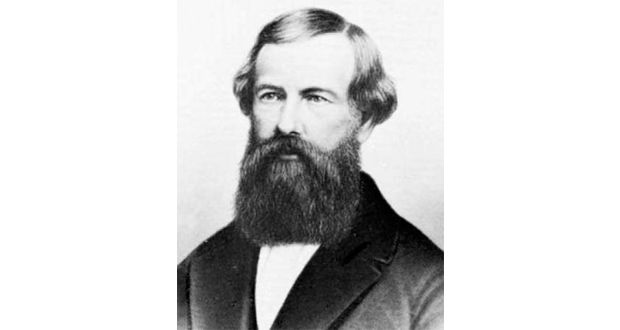
The next step, one of the most important and decisive in the history of the elevator, was the invention of the American Elisha Graves Otis (1811 – 1861). In 1852 he devised a safety device that led to safe elevators, because it prevented falls and stopped the elevator in the event of a breakage of the support cable. Thanks to this, the elevator was incorporated into modern life.
“EGOtis’s idea was simple but pioneering. It consisted of mounting toothed iron bars on the guide rails, while adding toothed irons that could be attached to the cabin. When the cable broke, a spring activated the teeth, which grabbed onto the iron bars and thus stopped the device from falling.” Otis began selling the first “safe” elevators in 1853. Even so, his invention did not become widely known until the World’s Fair in New York in 1854. He installed an elevator in the New York Crystal Palace, the site of the exhibition: he loaded it with heavy boxes and barrels, got in, and when he reached a height of approximately four floors he asked his assistant to cut the rope. The new safety mechanism devised by EGOtis stopped the elevator abruptly, preventing it from falling to the ground, and from that height he uttered three words: “all safe, gentlemen.” This exhibition was a true revolution for the lifting industry.
Later, Werner von Siemens (1816-1892), today the name of a well-known multinational, introduced the electric motor in the cabin of elevators that rose by means of rotating pinion gears that activated the supports on the sides of the shaft, according to research by Martín A. Cagliani of the University of Buenos Aires. In 1887, an electric motor was invented that turned a drum on which the hoisting rope was wound. In 1925, memory modules were incorporated, an element that definitively replaced elevator operators: a curious job that barely lasted 50 years, and that today only survives in certain buildings for purely aesthetic reasons.
Since the second half of the 20th century and up to now, there have been only improvements: greater smoothness, greater precision, greater height reach, greater speed, electronic protectors, integrated microprocessors, energy savings, installations without machine rooms, control cells for the passage of people and goods, remote control, custom-made elevators, destination preselection, etc.
Currently, knowledge about vertical transport continues to evolve day by day, distinguishing two types of systems: hydraulic and electric elevators .
Related post:
Source: The invention that created vertical cities, Art and Culture; officemuseum.com


3 Responses
Hello good,
I was once told that in buildings from the beginning of the 20th century, elevators could only be used in an upward direction. I find this very curious.
Is it really like that??
thank you