
Summary:
In an interview with GMV Eurolift, Xavier Torrent and David Zapater, from the Sant Andreu fire station (Barcelona Fire Department), confirm that 1 in 4 rescues in 2015 were in elevators, most of them avoidable and caused by the jump of safety devices, power outages or misuse. Rearming the device is complicated even for firefighters, especially in electric elevators without a machine room, while with hydraulic elevators there are fewer exits and they are easier to solve. Firefighters arrive in less than 5 minutes, compared to 20-30 for the maintenance company, and each intervention, although not charged, has a real cost per truck and working hours, in addition to communicating with the Generalitat's Industry to monitor maintenance. With fewer elevator rescues, the force could dedicate that time to other rescues and operational prevention, such as reconnaissance of the territory, the condition of the roads and fire hydrants, to arrive earlier and be more effective.
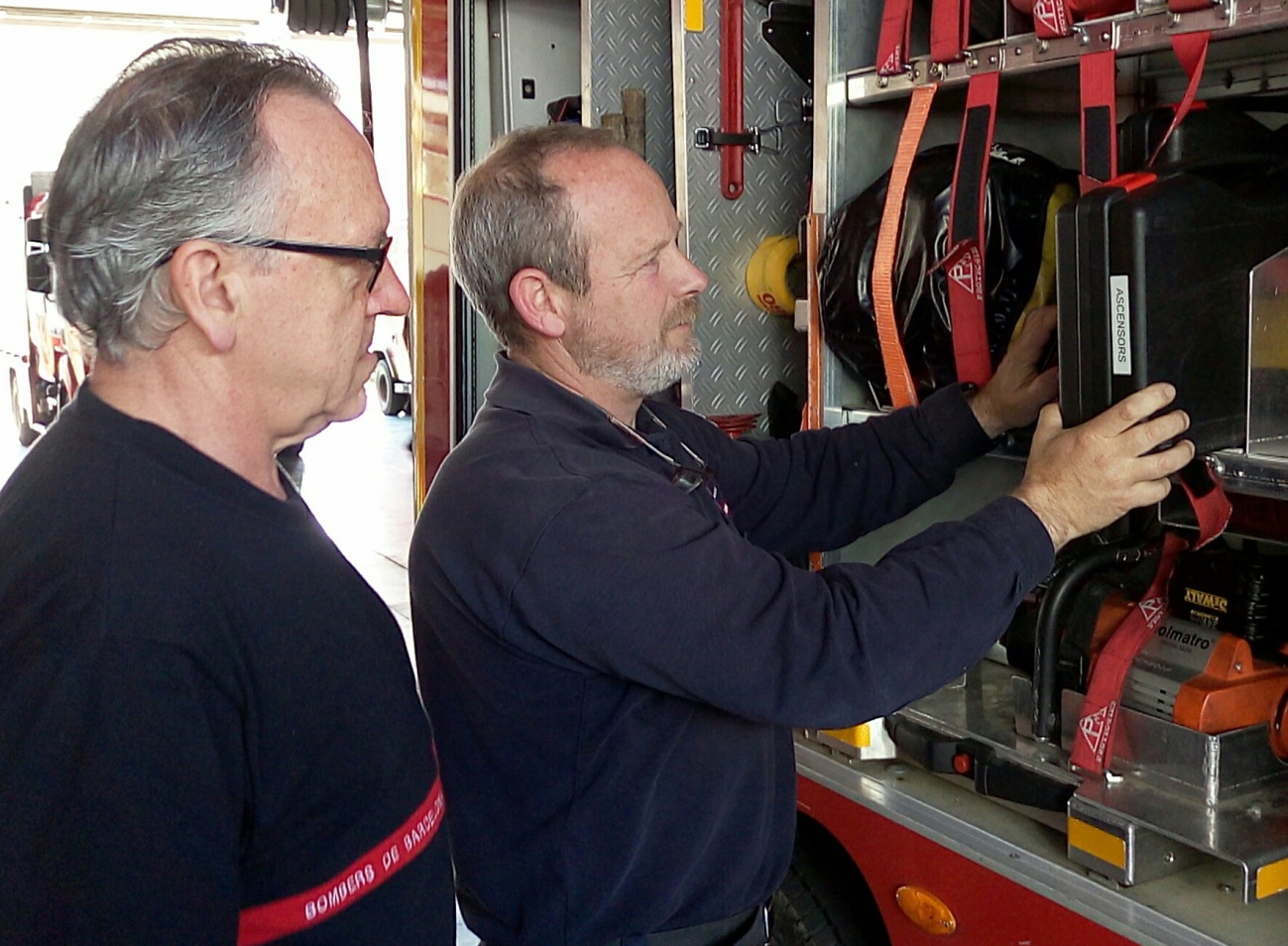
They take care of us Xavier Torrent, Chief of the Sant Andreu Fire Station of the Barcelona Fire Department and a historical reference point in the force regarding elevator rescue and David Zapater, current coordinator of technical assistance and foreman of the same park. In their more than 30 years of experience they state: “1 in 4 rescues by the Barcelona Fire Department during 2015 ha in elevators”
First of all, we would like to thank you for agreeing to do an interview for our blog “Elevators” and to be able to talk specifically about the problems surrounding the rescue of people in elevators.
A few weeks ago we reported on a news item in which it was commented that 1 in 4 rescues carried out by the Barcelona Fire Department during 2015 was to rescue people who had become trapped in elevators.
GMV: Does this situation really occur so often?
Yes, it is a fact. Elevators are equipped with many safety devices that stop the device and the problem is to restart it. People who get trapped inside get scared and call the fire department.
GMV: Based on your experience, what do you think might be the reasons why people stay locked up?
When one of the safety devices is triggered or fails, the device stops, there are power cuts, the elevator is misused, etc. These are not major incidents, but they do occur.
Currently, due to the fact that so many work is being done, all work on elevators is reported to the Department of Industry of the Generalitat so that the maintenance companies are monitored to ensure that the maintenance work is being done correctly.
GMV: How long do you think a person can spend on average stuck in an elevator waiting to be served?
Normally, what happens is that people call the maintenance phone in the elevator to report that they are trapped. The company notifies the nearest operator, but depending on where he is at the time or if he is working, he has to pick up and it takes at least 20 to 30 minutes. People get nervous and call the fire department, who are there in less than 5 minutes. We often overlap in the installation.
There are also people who lose their temper quickly or, depending on the time of year, if it is hot, for example, they immediately call the fire brigade.
GMV: Do you think that in most cases they could be avoided?
Most cases are avoidable, in the sense that there are people who do not make good use of the device and this fact causes more rescues.
Normally, what happens is that people call the maintenance phone in the elevator to report that they are trapped. The company notifies the nearest operator, but depending on where he is at the time or if he is working, he has to pick up and it takes at least 20 to 30 minutes. People get nervous and call the fire department, who are there in less than 5 minutes. We often overlap in the installation.
GMV: And do you know if these lockdowns also occur in special situations such as hospitals?
In these centres where there is a maintenance or security person, we try to ensure that this person is trained in this type of rescue and we go less often, but we do have interventions in these centres as well.
GMV: Generally speaking, could you quantify the costs of carrying out this series of avoidable rescues?
There is no charge for rescues to either the affected person or the owner of the facility, but of course, there is a real cost, the use of the truck, the hours of the firefighters working, everything has a cost.
GMV: Do you know the difference between a hydraulic and an electric elevator?
Yes, we have conducted a study of when the operating procedure was developed, which has grown with the diversity of elevators. We have documented all the information we have on both hydraulic and, above all, electric elevators (where we have more problems) in order to be able to work more safely.
GMV: Could you tell us in % to what extent you have carried out rescues in electric and hydraulic elevators?
Many more are made in electric, especially now that we have elevators without machine rooms that cause many problems.
In our blog “Elevators” we write technical and public interest articles about hydraulic elevators. One of the advantages of hydraulic operation is that in the event of an electrical failure, passengers are freed without needing external help thanks to an integrated emergency system.
GMV: We would like to end the interview by asking you: If there were more hydraulic lifts installed and consequently fewer rescues... do you think that this time not invested in being able to provide other types of assistance or services could benefit you?
It is clear that if we were not doing so many elevator rescues, we would be doing another rescue or preparing for the moment when we would have to do them.
We could spend more time on operational prevention, reconnaissance of the territory, location and condition of roads and fire hydrants, so that we could arrive more quickly and we would be more assured that we would not have water supply problems.
Work could be done to be more effective.
Mr. Torrent and Mr. Zapater, we thank you for granting us this interview for the Ascensores blog and we take this opportunity to congratulate you for the work you do every day helping people.

Postgraduate in Product management at Eada Business School. Qualification in Project Manager and Community Manager from Cecot. Responsible for Marketing and Communication at GMV Eurolift SAU since 2010.


