
What is cavitation?
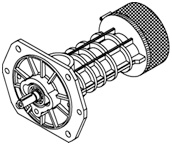
The phenomenon of cavitation occurs when the fluid has difficulty entering (sucking) the pump suction duct , causing the pressure in this duct to drop. If the pressure is lower than the vapor tension of the fluid itself, this will lead to the formation of bubbles called cavities (which will be occupied by vapor from the fluid itself).
The vapor pressure of a fluid is the maximum pressure that the saturated vapor of said fluid can reach at a given temperature, which will depend on the type of fluid in question and its temperature.
When does it occur?
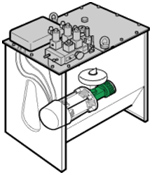
Cavitation occurs when these vapour bubbles, called cavities, move from the suction area to the delivery area (pump), where they are suddenly compressed under very high dynamic pressures. When they explode, they tear microparticles from the pump body, leading to its deterioration, poor fluid delivery and rapid ageing of the pump, with loss of its pumping capacity (flow rate) and pressure increase.
Why does cavitation occur?
This phenomenon is mainly due to:
- Dirt in the suction filter.
- Very low fluid level.
- Excessive speed in the suction pipe due to the small diameter of said pipe.
- Suction pipe blockage.
- That the fluid is at a very low temperature.
- That the electric motor does not give the revolutions calculated for this pump.
- That the tank's ventilation register is covered.
- That the fluid is not adequate or is not in good condition.
- That there are closed or half-closed valves in the pipes of this circuit.
Remedies to avoid it
Remedies to prevent cavitation are:
- Good machining and state of preservation of the pump.
- That the suction pipe is wide and short and that it is introduced into the fluid with a perfect seal with the pump.
- Do not start the pump when the fluid is very cold (heat it to the appropriate temperature).
- Do not work with very high fluid temperatures.
- That the pressure in the suction circuit is that indicated by the manufacturer.
- Ensure the correct fluid level in the reservoir.
Source: Handbook of Industrial Hydraulics. Applied electricity. Author: José Roldán Viloria.
Related posts:




5 Responses
How curious, I was looking for articles on ultrasonic cavitation for my blog and I found this one on cavitation in hydraulic pumps…
I take this opportunity to greet you, I have the following problem, the PLC orders were changed. And since then the pump makes a noise, as if it were straining, apart from when the elevator goes down the pump is on. Is this normal for the pump to be working when the elevator goes down when the piston is a single action? What can you recommend to me to start checking it?
Dear Ulysses,
Our technical service will contact you to resolve your query personally. Thank you for contacting us.
Gentlemen: I have a 400 W electric motor on my electric bike and sometimes, when starting it makes a very loud noise. Is it possible that the electric motor does not give the required revolutions and cavitation occurs? If so, how can it be solved?
Waiting for your news, I send you my regards.
Jose Maria Rodriguez Alvarez