
Article updated: 06-18-2026
Piston
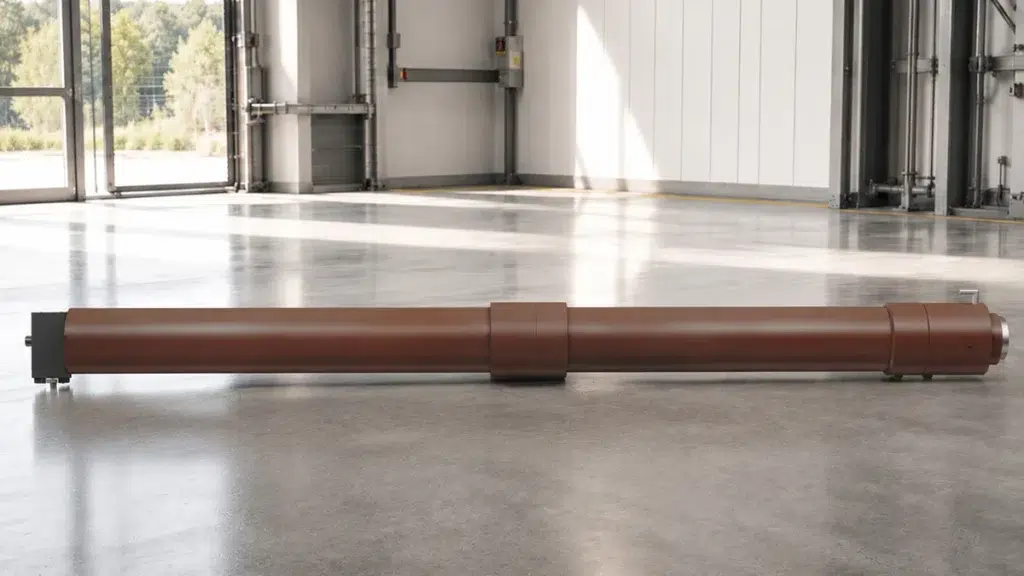
Vertical cylinder consisting of a rod (inner element subjected to a vertical movement), an outer cylinder and a sleeve (space between the rod and the inner part of the cylinder) that, when filled with oil, presses the rod upwards and this causes an upward movement. moving the cabin upwards||Depending on the installation the piston can be telescopic or conventional and of direct or indirect traction.
Chassis
Structure that supports the cabin and moves along the guides.

Cabin
Compartment where passengers are transported.
Fluent
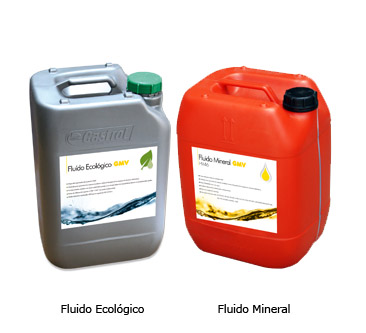
Element that transmits the energy from the pump to the piston. It is advisable to use synthetic, ecological or mineral oils, with a very high flash point.
Read again: Basic elements of a hydraulic elevator (I)



23 Responses
I AM VERY INTERESTED IN KNOWING THE SHAPE OF THE HYDRAULIC CYLINDER OF AN ELEVATOR. IS IT TELESCOPIC, WITH SEVERAL CONCENTRIC SECTIONS? IS IT PLACED UNDER THE CABIN? DO THE SECTIONS OF THE PISTON COME OUT DEPENDING ON THE FLOOR WE GO TO?
IF THE BUILDING IS FIVE FLOORS WHEN THE ELEVATOR IS IN
THE 5TH PISTON SECTIONS REACH ALL THE WAY TO THE TOP?
THANK YOU
Hello Manuel,
A hydraulic piston can be of two types, single-section or multi-section (also known as telescopic). Both can be placed under the cabin or laterally. They work by direct thrust (1:1 pull) or indirect thrust (2:1 pull, reduction by pulley and cables).
If it is a telescopic piston (they are always direct pull, 1:1), when the elevator ascends, the sections all come out at the same time in a coordinated manner. One section does not drag the other, so sudden impacts in the cabin are avoided. It should be noted that the number of stops and the sections of a piston are not related to each other, they are completely independent.
If it is direct traction (1:1 throw), the piston section will always reach where the cabin is positioned. If it is indirect traction, the head of the rod and the pulley will always be slightly above the cabin (depending on the number of stops, it will be at one distance or another above the cabin).
If you need more information, please do not hesitate to contact us again. We hope the answer will be helpful!
Greetings,
I would like to know if a hydraulic elevator installed in a single-family home with a ground floor and a first floor can be fitted with a safety system so that in the event of a power failure it always descends and opens doors regardless of whether there is anyone else in the home. Thank you.
Hello Eugene!
The elevator you are referring to most likely already has a built-in safety system to prevent this problem. In the event of an emergency due to a power failure, hydraulic elevators allow the cabin to descend to the nearest level using an emergency battery (located in the control panel) and a 12 V coil (located in the lowering solenoid valve). The emergency battery also allows the doors to be opened to prevent someone from being trapped inside the cabin. This safety measure is not mandatory, but practically all hydraulic elevators today have this system as standard due to its low cost. In the case of electric elevators, this device is more expensive financially and consequently its presence is much greater in hydraulic lifting systems than in electric ones.
We hope this answer helps!
I am a firefighter and would appreciate information about the necessary and sequenced actions to remove a person who has become trapped in an elevator, whether conventional or hydraulic.
Thank you.
Hello Jose Francisco,
It should be noted that the type of rescue will depend on each lift (whether hydraulic or electric). As regards hydraulic lifts, one of the manipulations necessary to remove a person who has become trapped is the emergency button. You will find more information about this and other safety measures in this article.
We hope we have been of help to you. Best regards!
Hello, nice to talk to you Marc. My comment is because I am very interested in the subject of hydraulic lifts and above all I would like to thank you for all the information that you give to all Internet users on the aforementioned subject of hydraulic lifts. As I said, I am very interested in this subject, because I would like to install one in my block of flats. If you can provide me with extensive information on materials, designs, calculations, budgets, and above all information on its installation, and explanations of how to do it, let's say in a few words a report on which will touch on the subjects already discussed, I would be very grateful. Greetings and thank you very much for everything.
Hello Isaac,
In order to guide you and provide you with all this information, we should have some information about your installation||If you want, you can contact our Commercial Department through +34 937 745 455 o comercial@es.gmvgrupo.com and they will guide you according to the needs of the installation.
Thank you for your comment! Regards,
I would like to know how the impact that hydraulic elevators sometimes have could be reduced to as little as possible.
Thank you
Alex
Hello:
I live in a chalet on the outskirts of Madrid. I would like to know if it is possible to install a hydraulic lift between two floors but that works in reverse, that is, that the anchor is in the ceiling so that the waiting position is on the first floor and not on the ground floor so as not to interrupt the passage. In principle it can be for a single adult person (200 kgs. more or less).
Thank you for your reply.
Good afternoon, I am Joaquin Guillemi from the company Guillemi Elevators. More than 20 years ago, a three-section telescopic piston was purchased from you for a central piston elevator with a load of 600 kg. We have to change it because it has completed its operating cycle.
We need to know the cost of the piston, its travel is approximately 12 meters
I hope you get a satisfactory answer
thank you so much