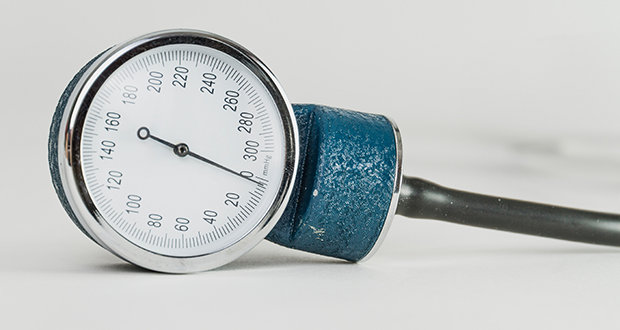
What does the working pressure of hydraulic equipment depend on?
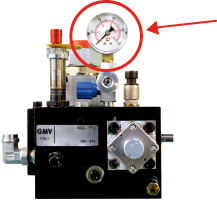
Working pressures depend on the nominal load of the lift and the diameter of the piston . Long strokes usually require larger diameter pistons; the opposite is true for short strokes where smaller diameter pistons are more suitable. Working pressures of between 35 bar and 45 bar are generally used.
How to measure working pressure
Hydraulic lifts must be equipped with a safety valve to limit the pressure and a pressure gauge to read the working pressures. In addition, the entire hydraulic circuit must be subjected to a test pressure equal to the nominal pressure increased by 5%.
Related Posts:


5 Responses
Hello good,
According to the post, the working pressure of the equipment is 40 bar.
I wanted to know if the working pressure of the hydraulic piston is also 40 bar or if, according to one of your catalogues (pipes for fixed couplings on pistons), the maximum working pressure of the piston is 80 bar.
What is the working pressure of the hydraulic piston?
Thanks in advance.
Greetings.
Good afternoon Marc,
As the post indicates, working pressures of 45 bars are generally used because this is the maximum working pressure of the valve group.
The maximum piston pressure is calculated using Annex K.1 of the UNE EN 81.2 standard based on the diameter and thickness of the piston. In other words, the maximum piston pressure is not a fixed value, but depends on each type and model of piston.
On the other hand, in the Technical Catalogue sheet that you mention, the maximum pressures of the different rigid pipes appear. These are calculated in the same way as the pistons, following Annex K.1 of the UNE EN 81.2 standard. Therefore, two pressures appear in the sheet depending on the type of piston to be used because the safety coefficients for pistons with more than two stages and/or telescopic pistons with hydraulic synchronization are higher.
If you have any further questions, please do not hesitate to contact us.
Greetings,
Good afternoon Marc,
In response to your query, the maximum working pressure of our hydraulic equipment is 45 bar, although this may vary slightly depending on the type of piston (single stage, telescopic, etc.).
All components have been designed to be able to work at this pressure (not only the pistons): the walls of the cylinder liner and the stem have been designed in accordance with Annex K.1.1 as indicated in the UNE EN 81.2 Standard, and other components such as the seals and gaskets have also been designed to work at this pressure. Also the control units, pipes, and all the accessories necessary to guarantee the safety and comfort of the installation.
Regarding the question you have about the technical data sheet on the maximum working pressure of the pipes, I would like to tell you that rigid pipes must be calculated in accordance with Annex K.1.1 of the UNE EN 81.2 Standard, as well as pistons and other components subject to pressure. Under these calculation conditions, depending on the diameter and thickness of the pipe, we obtain that the maximum working pressure of the pipes could be 80/61/ etc. bar depending on the type of pipe and the type of piston installed. In other words, the pressure indicated is the maximum working pressure that the pipe could reach depending on the type of piston installed.
We hope we have answered your question.
Greetings,
Greetings
I would like to ask if it is correct to carry out the following procedure when checking the safety pressure valve: load the platform with the nominal load, measure the pressure on the pressure gauge, multiply it by 1.8, close valve A and check that the pressure stabilizes at the calculated value.
Hello Diomer!
For technical questions you can contact our SAT department by email at sat@es.gmvgrupo.com
All the best!