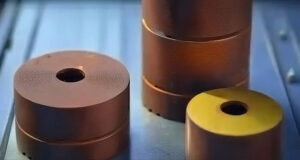
Shock absorbers (II): types, location in an elevator
According to EN 81.1, there are three types of shock absorbers: energy storage, energy storage with return motion damping, and energy dissipation.
According to EN 81.1, there are three types of shock absorbers: energy storage, energy storage with return motion damping, and energy dissipation.
What are they?
Shock absorbers (buffers in English) are an organ designed to serve as a deformable end-of-travel stop and consist of a fluid or spring braking system (or other equivalent device).
Telescopic pistons designed and manufactured for operation in hydraulic lifts require higher standards than those used industrially.
Telescopic pistons, which can be 2, 3 or 4 sections, have the advantage of being able to double or triple the elevator travel for the same cylinder length.

The shaft is the space exclusively intended for the movement of the elevator and the counterweight (if it is electric), but it cannot be used for any other installation other than the elevator.
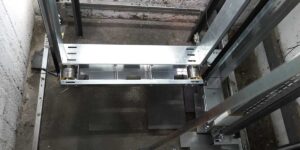
The lower part of the enclosure, below the level of the last stop, is called the pit. The floor must be smooth and substantially level.
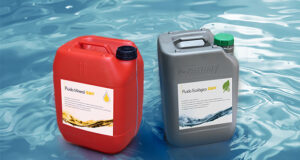
Due to the growing interest in the environment and new legislation, biodegradable fluids are becoming increasingly important in the lifting sector. They can be classified into 3 categories according to their base.
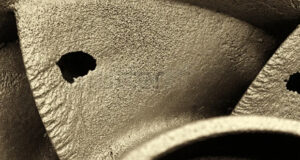
The phenomenon of cavitation occurs when the fluid has difficulty entering (sucking) the pump suction duct, causing the pressure in this duct to drop. If the pressure is lower than the vapor pressure of the fluid itself, this will lead to the formation of bubbles.

We understand Homelift to be any type of small-sized lift or single-family elevator designed to be installed in single-family homes, chalets, etc.
Today, thanks to technology, great advances have been made in the elimination of architectural barriers and facilitating access to buildings where the installation of an elevator was previously impossible.