
What are rigid and flexible hoses used for in an elevator?
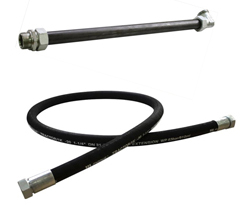
The main function of rigid and flexible pipes is to join the valve group and the piston (through the parachute valve). He fluid it must be able to circulate through the pipeline with the pressure necessary to move the piston rod.
When to use a flexible or rigid hose
Depending on the characteristics of each installation, we will use rigid (steel) conduits , flexible (rubber-based and with textile and metal layers) or a combination of both types. Most hydraulic installations are made up of flexible conduits, this is because, in addition to being easier to assemble, they have a greater degree of adaptability than rigid conduits.
What size should a hose be?
Flexible piping is effective for up to 15-metre sections, but at greater distances pressure losses may occur: as it is a special rubber compound, it has a greater degree of expansion than a tube. When the installation requires sections longer than 15 metres, the two types of piping are combined: the section connecting to the valve group and the piston is made with flexible piping, and the middle section is mounted with rigid piping.
On the other hand, rigid conduction is almost always combined with flexible conduction, since making a connection to the piston or valve group is complicated due to its low flexibility, as its name indicates.
The characteristics of flexible pipes will depend on:
- Flow rate to be transported in l/min, which determines the internal section of the pipe.
- Maximum service pressure that must be supported and that determines the thickness of the tube.
- Method of making couplings between driving parts.
- Fastening of pipes and other elements. Particular attention to water hammer.
- Connecting the drive to the other components.
- Pipe layout shapes. Bends, elbows, horizontal and vertical straight sections, reductions, couplings, connections and others.
- Internal roughness of the pipe.
Related posts:




5 Responses
Very useful, I found it very concise.